
MADE TO ORDER | 0% FINANCE AVAILABLE | DESIGNED IN THE UK


At Midnight Diamonds, we believe in ethical luxury. All our diamonds are of the highest quality: Excellent cut, E Color, and VS1 Clarity. This ensures affordable luxury without compromising on ethics.
Diamond Education
Diamonds are graded across the world on standard parameters knows as the 4 C’s : Carat, Cut, Colour and Clarity. We’re here to help you understand these details and choose the right solitaire.
At Midnight Diamonds, we believe in ethical luxury. All our diamonds are of the highest quality: Excellent cut, E Color, and VS1 Clarity. This ensures affordable luxury without compromising on ethics.
Diamond Colour
Interestingly, the colour evaluation of diamonds is based on the absence of colour, so when we speak of colour we actually are referring to the degree of colourlessness in a diamond. Many of these colour distinctions are so subtle that they are invisible to the common eye; however, these distinctions make a significant difference in diamond price and quality. While most diamonds are white, not all are truly colourless, they have colour tints. In a white diamond, the presence of a tint is considered undesirable. Diamonds are graded on a Whiteness scale or absence of colour scale. Basically, the whiter or clearer the colour of a diamond, the greater its sparkle and thereby its value.
The IGI has devised a set of guidelines to grade diamond colour ranges from D to Z, with D colour diamonds being rare, totally colourless, and the most expensive. Each letter represents a range of colours based on a diamond’s whiteness.
Colour | Description |
D | Absolutely colourless. The highest colour grade is extremely rare. |
E | Colourless. Very negligible traces of colour can be noticed by an expert gemologist. A rare diamond. |
F | Colourless. Very negligible colour traces can be seen by an expert gemologist, but are still considered a “colourless” grade. A high-quality diamond. |
G-H | Near-colourless. Colour is noticeable when compared to diamonds of better grades, but these grades offer excellent value. |
I-J-K-L | Colour is detectable. An excellent value, especially if the diamond is to be set in yellow-gold jewelry. |
M-N | Noticeable pale yellow colour. |
O-Z | Noticeable yellow colour. |

Diamond Cut
he Cut is the single most important factor in a diamond’s beauty. It dictates how the stone handles light, determining its brilliance (white light), fire (flashes of color), and scintillation (sparkle).
The Anatomy of Cut: Includes proportions, polish, and symmetry.
The Conflict: Cutters often face a choice between Maximum Sparkle (optimal cut) and Maximum Size (carat weight). A “Poor” or “Fair” grade often indicates a diamond was cut specifically to retain weight at the expense of its beauty.
IGI Grading Standards
How a diamond is graded depends on its shape:
Round Diamonds: Graded on Cut, Polish, and Symmetry.
Fancy Shapes: Graded on Polish and Symmetry only.
GradeDescription
- Excellent – Maximum fire and brilliance; perfectly proportioned.
- Very Good – High reflectivity with expertly cut facets.
- Good – Reflects most light; a balance of beauty and value.
- Fair – Noticeable light leakage from the sides/bottom; less vibrant.
- Poor – Appears dull or “dead” to the naked eye due to poor proportions.

Diamond Clarity
Clarity reflects the purity of a diamond or the inclusions and blemishes in a diamond. The inclusions and blemishes impact a diamond’s ability to let in light and reflect its brilliance. Inclusions are interior irregularities and blemishes are exterior irregularities. These imperfections are not flaws, but rather the natural fingerprint of every diamond. Often, we can see these only under a powerful microscope or jeweler’s loupe, and they do not visibly affect the appearance or beauty of a diamond. Large inclusions can affect the scintillation of a diamond considerably be absorbing the light passing through. Some inclusions are coloured too, the most common one being “Nats”- a black inclusion, which is considerably big, and can be easily spotted by the naked eye. The larger or more numerous the inclusions the less valuable the diamond.
Internationally, diamonds are graded by labs according to the following grades:
- FL Flawless: These diamonds are completely clean and have no inclusions or blemishes detectable under 10x magnification. They are extremely rare and expensive.
- IF Internally Flawless: These diamonds have no detectable inclusions but may have some surface blemishes under 10x magnification. They are very rare and very valuable.
- VVS1/VVS2 Very Very Slightly Included: Inclusions and blemishes are extremely difficult for even a skilled gemologist to detect under 10x magnification, usually visible only under a powerful microscope.
- VS1/VS2 Very Slightly Included: Inclusions and blemishes are detectable under 10x magnification, but are minor flaws that do not impact the diamond’s beauty and are totally invisible to the naked eye.
- SI1/SI2 Slightly Included: Inclusions and blemishes are easily noticeable under 10x magnification and may also be visible to the naked eye.
- I1, I2, I3 Included: Inclusions and blemishes are obvious under 10x magnification and typically visible to the naked eye. These flaws may negatively impact the transparency and or brilliance of the diamond.

Diamond Carat
Diamonds are sold by the carat (shown as ct.), which is actually a unit of weight, though most think of a carat in terms of size. A carat is equal to exactly 0.2 grams (about the weight of a paper clip). Important to note that Carat weight is not related to the similar sounding karat, which refers to gold’s purity.
Two diamonds of equal carat weight can have very different costs based on other factors. (Such as cut, colour, and clarity.) The carat of a diamond importantly indicates its size which is usually made e.g. a 1 ct round brilliant cut diamond is usually 6.4 mm in diameter. Most women will relate the ct wt. to the size referring to 1,2 or 5 ct stones but the size can vary depending on the shapes as well.
As the carat size of the diamond increases, the diamond’s price increases at an increasing rate. Why? Because the larger the diamond, the more increasingly rare it is. Price is not directly proportional to size. So, a 2-carat diamond of certain quality will be priced at more than twice the price of a 1-carat diamond of the same quality.
The size (in mm) of a diamond for a specific shape, is directly proportional to the carat weight of a diamond. See chart below for Round Cut as an example.
International Gemological Institute (IGI)
Every lab-grown diamond we offer is accompanied by a full grading report from the International Gemological Institute (IGI). As a global leader in diamond certification, IGI is widely recognized as a premier authority, particularly for its deep expertise and stringent standards in grading lab-grown diamonds. This certification provides a comprehensive, objective assessment of your diamond’s quality, giving you complete confidence in your purchase.
An IGI certificate is your diamond’s unique identity document. It details the universally recognized 4Cs—Carat, Cut, Color, and Clarity—using the same rigorous scales applied to natural diamonds. The report also includes specific information about the diamond’s shape, measurements, and a unique laser inscription on the diamond’s girdle that corresponds to the report number. This transparency ensures that you are getting exactly what you pay for, allowing you to compare and choose with peace of mind. By choosing an IGI-certified lab-grown diamond, you’re not just buying a beautiful stone; you’re investing in a scientifically verified and ethically sourced symbol of brilliance and modern luxury.

At Midnight Diamonds, we believe in ethical luxury. All our diamonds are of the highest quality: Excellent cut, E Color, and VS1 Clarity. This ensures affordable luxury without compromising on ethics.
Our Full Collection
Discover iconic designs by our in-house team of master jewellers.
-
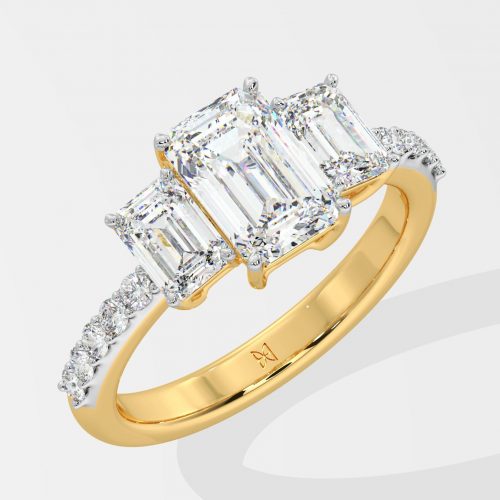
Three Stone Anniversary Ring
Select options This product has multiple variants. The options may be chosen on the product pageAdd to WishlistRemove from WishlistAdd to Wishlist -
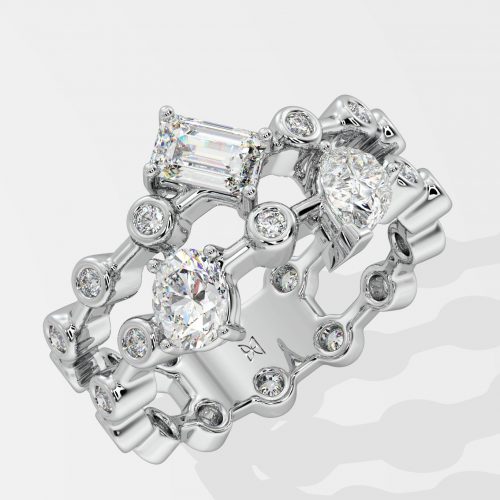
3 Stone Double Ring
Select options This product has multiple variants. The options may be chosen on the product pageAdd to WishlistRemove from WishlistAdd to Wishlist -
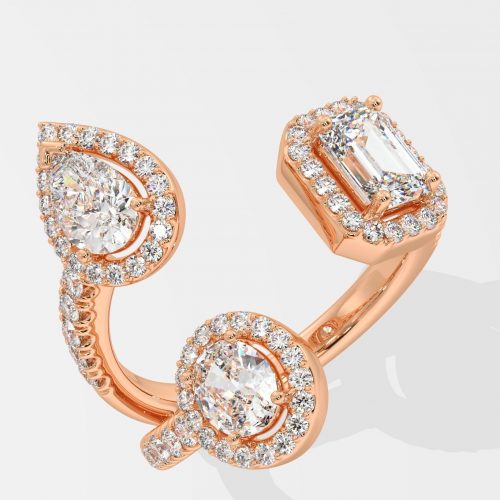
3 Stone Halo Gap Ring
Select options This product has multiple variants. The options may be chosen on the product pageAdd to WishlistRemove from WishlistAdd to Wishlist -
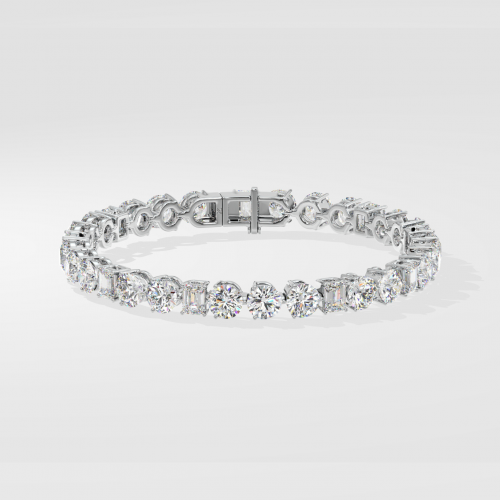
Blended Solitaire Tennis Bracelet
Add to WishlistRemove from WishlistAdd to Wishlist -
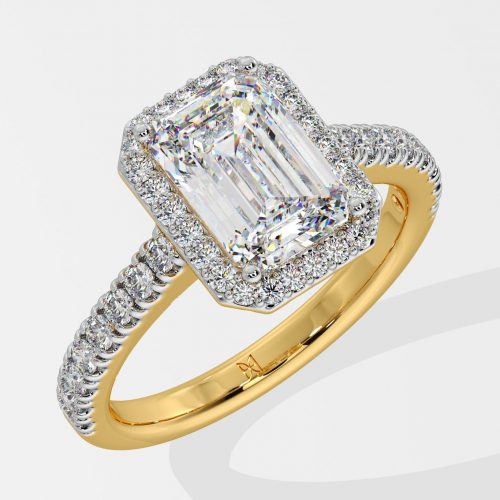
2 ct Emra Solitaire Halo Ring
Select options This product has multiple variants. The options may be chosen on the product pageAdd to WishlistRemove from WishlistAdd to Wishlist -
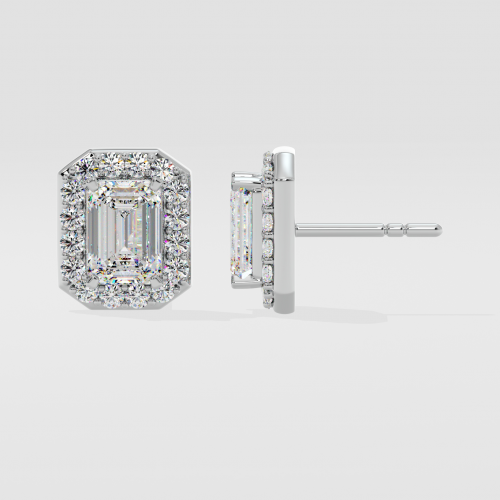
2 ct Emerald Halo Earrings
Add to WishlistRemove from WishlistAdd to Wishlist
